


Pixel Recess Atlanta: Community Operating System in Action
Most startup events are built for visibility, not connection. Panels, pitches, selfies and quick intros fill the calendar, but they rarely produce what ecosystems actually need — deeper collaboration, resource sharing and new relationships across silos. We’ve confused activity with actual outcomes.
Atlanta is the fourth startup ecosystem I’ve lived and worked in. I’ve participated in many more in person and through the magic of the internet. All of them are fragmented. Silos persist across roles, geography and industry, and founders and investors often see each other as “the other side”. Networking culture reinforces transactions over relationships, leaving us in rooms where “where do you fit into my pipeline/funnel?” overpowers “who are you and what important pieces of this bigger puzzle are you obsessed with solving?” This fragmentation creates a trap — the ecosystem has many resources, but they aren’t visible or shared.
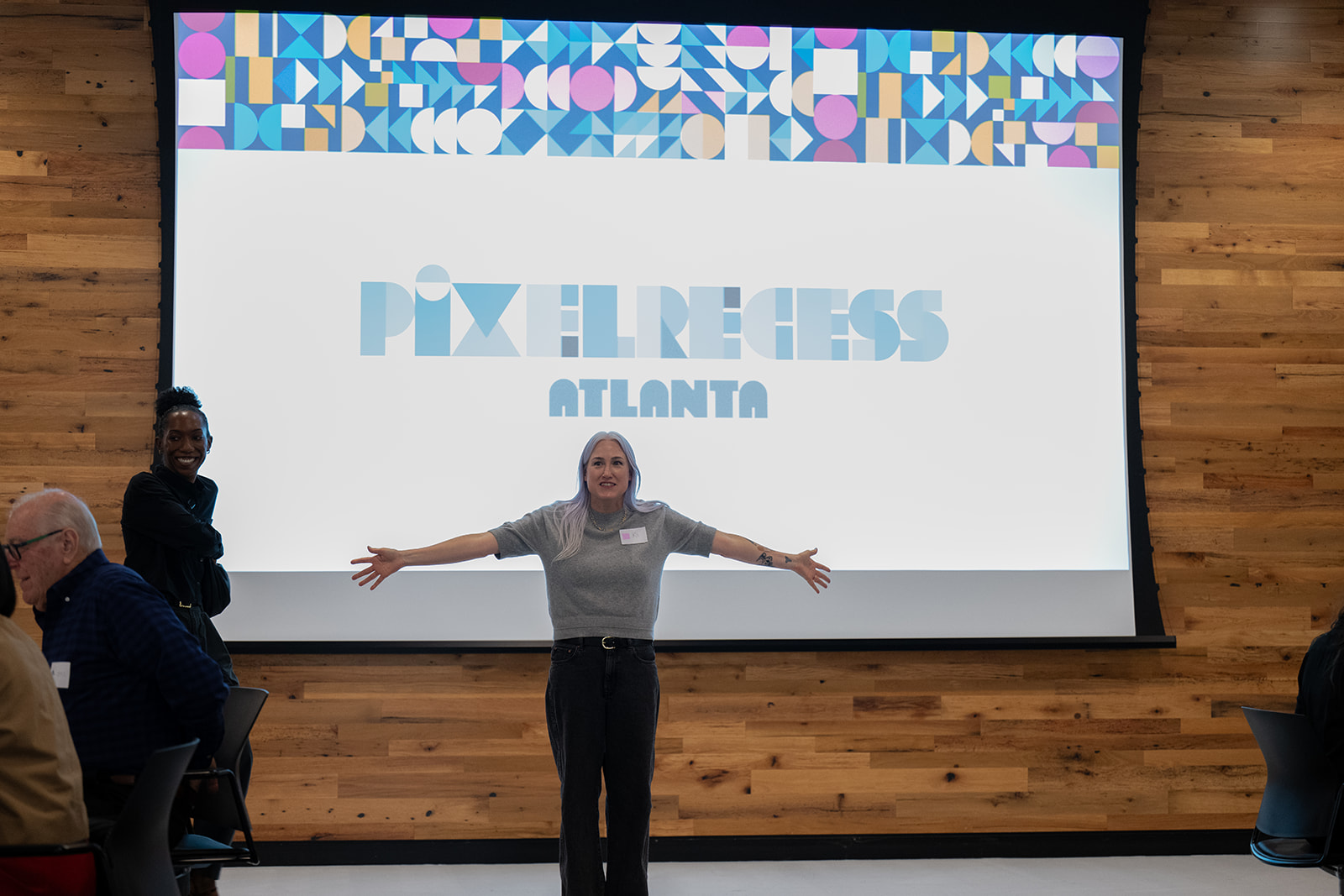
Pixel Recess Atlanta started as an experiment: what would happen if we designed a gathering specifically to surface those hidden resources and connections?
The premise was simple: connection doesn’t automatically happen just because people are in the same room or share the same role. A set of beliefs shaped the design of the experience, which centered an event but was always part of a bigger community strategy for Renew Venture Capital. Building on these beliefs set the foundation for success, starting with the fact that authenticity accelerates connection.
This builds on my Community as Operating System framework — a model for designing how people, trust, and resources move through a system. Pixel Recess Atlanta wasn’t just an event — it was an application built on top of a Community OS. Pixel Recess Atlanta worked because each layer of the system was intentionally designed. The central conversation activity worked because of something most people never saw — our Community OS.
Applying Community OS to Pixel Recess Atlanta
Most communities focus on gathering people. Community OS focuses on what happens between them. Months of work went into intentionally building into the system before and during the event. Here’s how we designed for this:
Nodes (People)
How did we decide who was in the system?
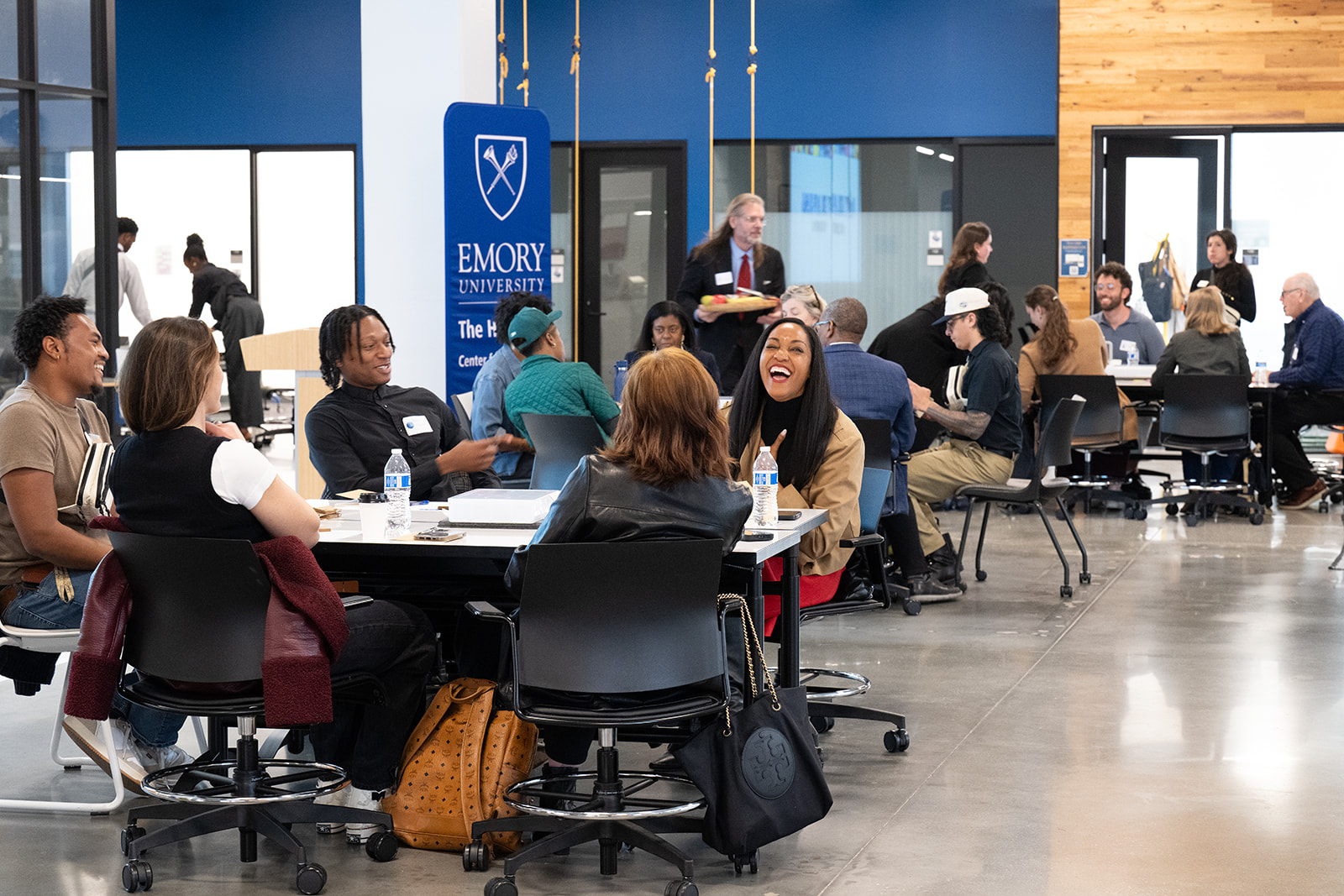
Who’s in the room determines what’s possible. Most events optimize for volume or familiarity, which leads to more of the same conversations and outcomes. We wanted a room that could actually produce new connections and surface hidden opportunities, so we designed for composition, not just attendance.
The guest list was intentionally curated across founders, investors, operators and ecosystem partners, with attention to both shared experience and meaningful differences. It wasn’t just about role, but about what each person carried into the room — their context, networks, and perspective. We kept the group relatively small, around 55 people, to preserve intimacy and ensure full participation.
Invitation-only wasn’t about exclusivity but accountability and commitment. It allowed us to avoid default or obligatory attendance and instead bring together a group where each person meaningfully contributed to the overall mix. The goal wasn’t to fill seats. It was to build a system where the presence of each node increased the potential for connection, relevance and movement.
Trust (Willingness to Engage)
What conditions did we create before interaction began?
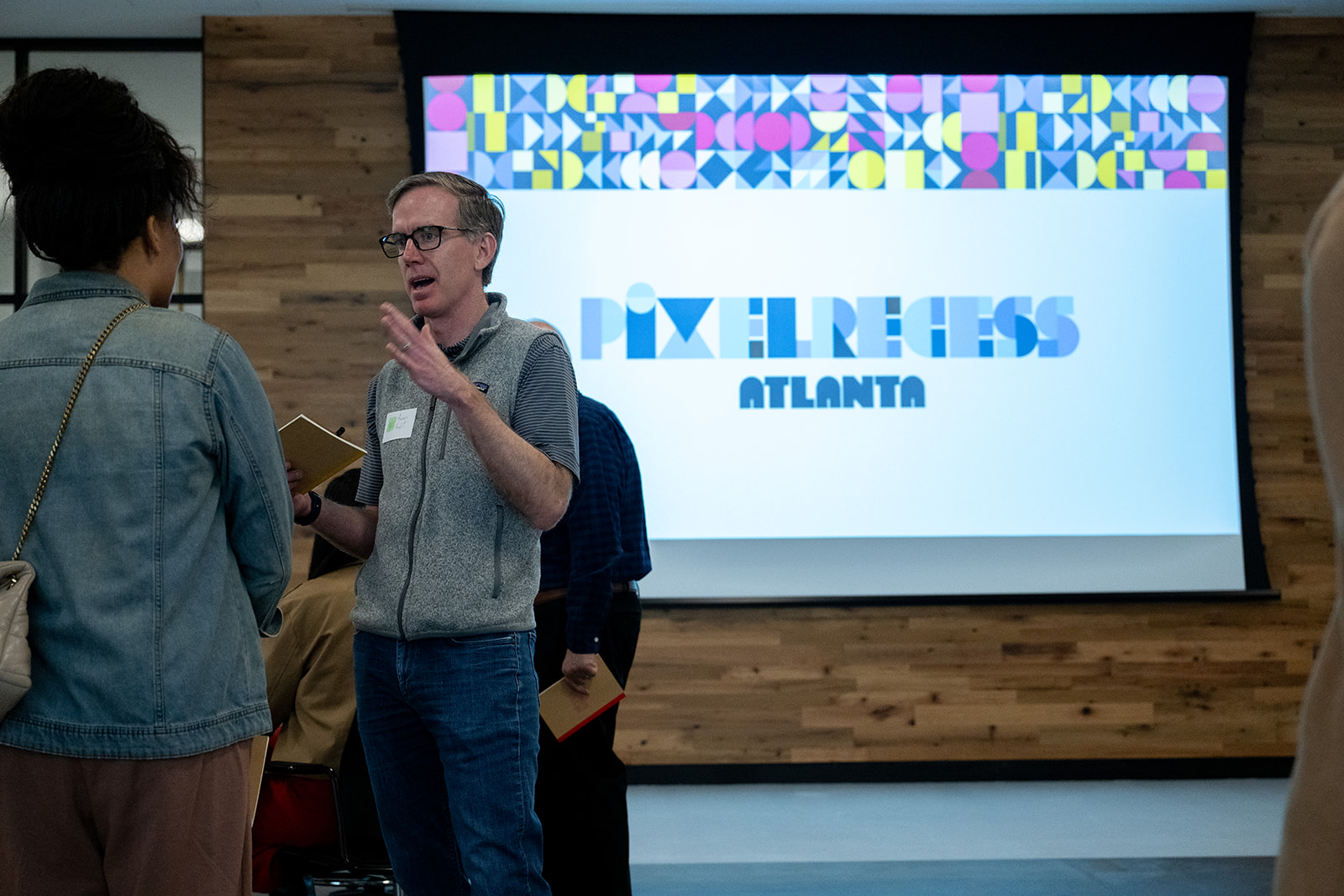
People don’t show up authentically just because you ask them to. Most professional environments reward performance: polished intros, clear positioning, staying “on script.” If we wanted something different to happen in the room, we had to create conditions for that before anyone arrived.
We primed participants across multiple touchpoints — from the save the date to hand-addressed invitations to follow-up communication — all designed to signal that this would be a different kind of experience. We set expectations clearly: no pitches, no panels, no passive attendance. At the same time, we resisted over-explaining the format, leaving room for curiosity and openness rather than over-preparation.
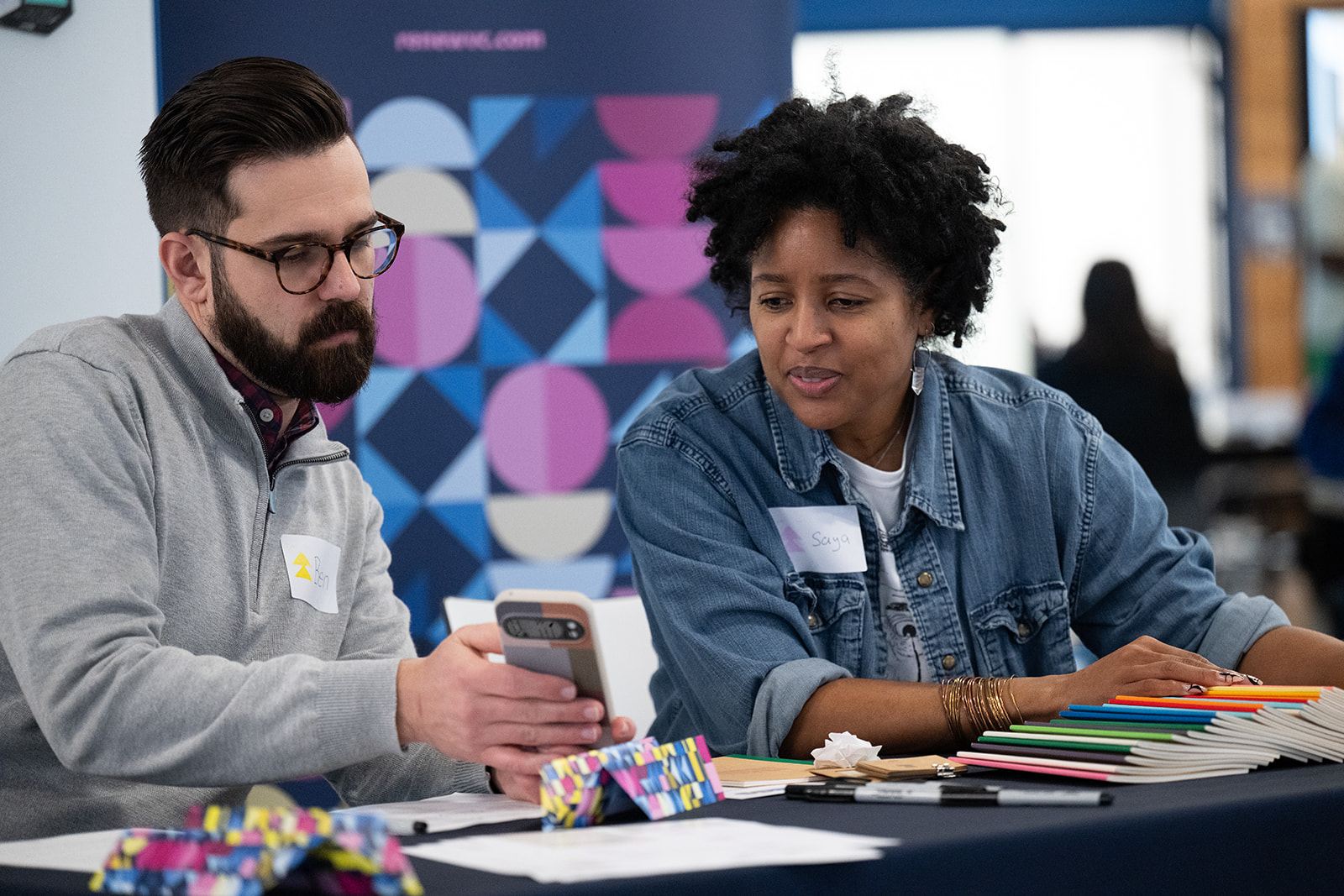
We introduced Participation Principles ahead of time to establish a shared baseline for how to engage. Small group structures were intentionally designed to increase psychological safety, and even small details like first-name-only nametags helped shift people out of role-based identity and into something more human.
Trust wasn’t treated as a byproduct. It was designed into the environment through tone, structure, and what we chose to prioritize so that by the time people entered the room, the default behavior was already starting to shift.
Signal (Visibility of Needs & Resources)
How did we design for signal to emerge?
Signal doesn’t show up just because you ask people what they need. In most environments, people default to generics or performance — vague asks, polished answers or nothing at all. We needed signal to be specific, contextual and visible, so we designed for it to be unavoidable.
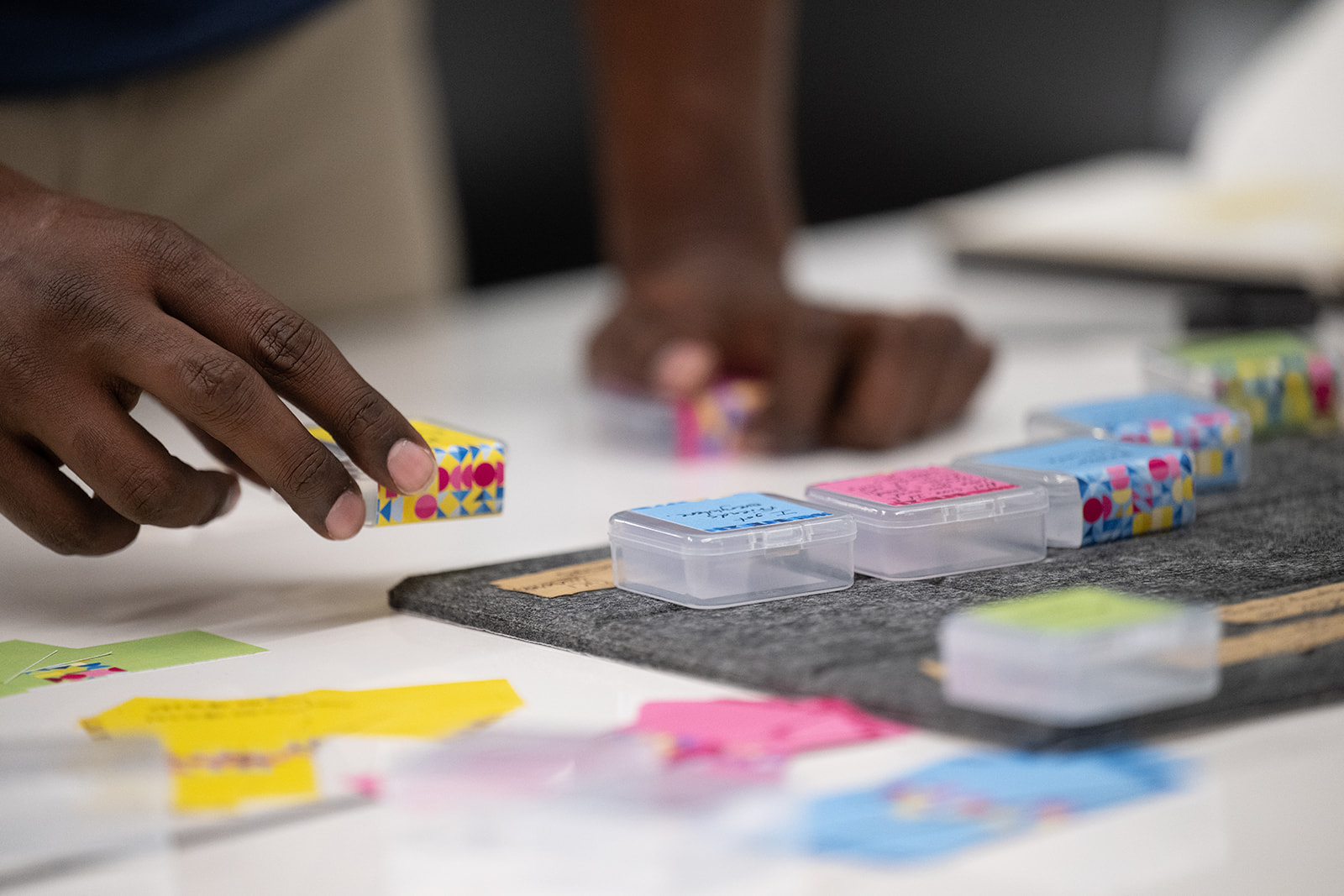
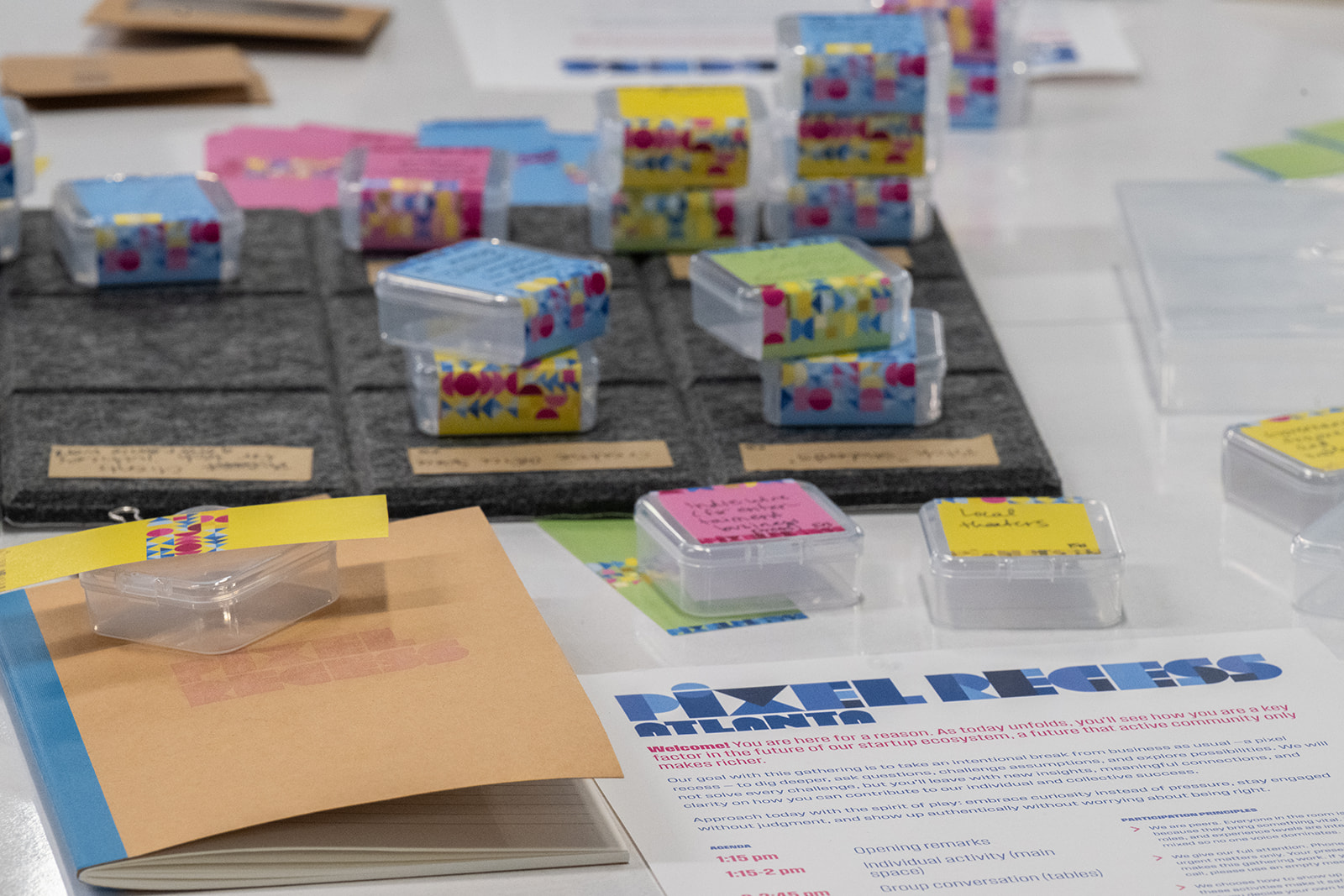
In partnership with Kayla Evans of Hauswarm, we created a structured Pixel activity that required participants to externalize both their resources and their needs. Not conceptually, but concretely. People had to write things down, make them physical and place them in relation to others. The format moved from individual reflection to small group conversation to a shared visible board, creating multiple layers of context around each input.
We also constrained how the conversation could happen. This wasn’t open networking or optional participation. Light facilitation and prompts kept the focus on relevance — not just what someone had or needed, but why it mattered and how it connected. The goal wasn’t just to surface information, but to make it understood and actionable within the system.
By the time participants entered open exploration, signal wasn’t something that might emerge. It was already present, structured and visible — something people could immediately respond to rather than interpret or guess at.
Pathways (Connection & Movement)
What structures enabled interaction?
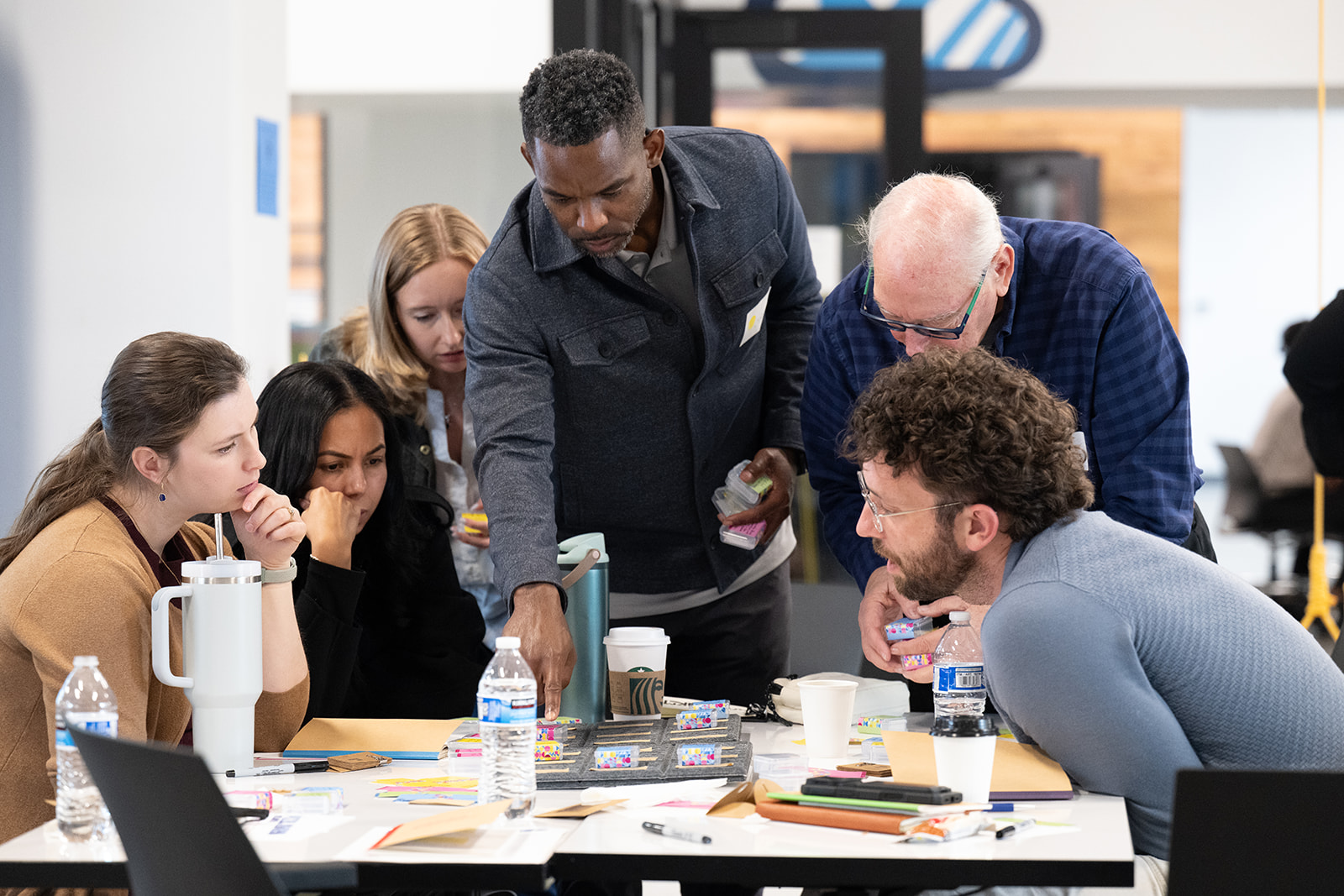
In most events, pathways are left to chance. People are expected to work the room, which tends to reinforce existing relationships and limit new ones. We wanted to design for movement — not just connection, but interaction that could actually go somewhere.
We structured the experience to create multiple pathways between participants. Instead of open networking, interactions were guided through a sequence of formats: individual reflection, small group conversation and collective exploration. Group composition was intentional, designed to create both alignment and contrast within each table.
We also introduced constraints that prevented early clustering. Group assignments were obscured until the activity began, reducing the tendency to jump ahead and find your subgroup. The physical setup of the Hatchery — including utilizing central and creative spaces over individual meeting rooms — allowed participants to move between conversations and engage beyond their initial group.
Mechanisms for response were built directly into the experience. As needs surfaced, participants could add themselves as resources, creating immediate pathways for follow-up. The goal wasn’t just to spark conversations, but to create clear, actionable connections within the system.
Continuity (Momentum Over Time)
What mechanisms extended beyond the event?
Most events end when people leave the room. Even strong connections dissipate without a way to carry them forward. If this is going to function as a system rather than a moment, continuity had to be designed in from the start.
We created multiple pathways for continuation beyond the event itself. A dedicated Slack space with role-based channels provided one shared environment for ongoing interaction, but the system isn’t dependent on a single platform. Organizer follow-ups were planned to reinforce connections and create additional touchpoints.
We also captured the data generated during the experience — needs, resources, and the relationships between them — as a structured layer of signal that could be revisited and activated over time. This wasn’t just documentation. It was a way to extend the system beyond the moment, allowing connections to continue evolving even after the event ended. More to come on that soon!
Continuity wasn’t treated as an afterthought. It was designed as part of the system itself, ensuring that what started in the room had multiple ways to continue moving.
Translating the System Into Experience
So what did that design actually do in the room?
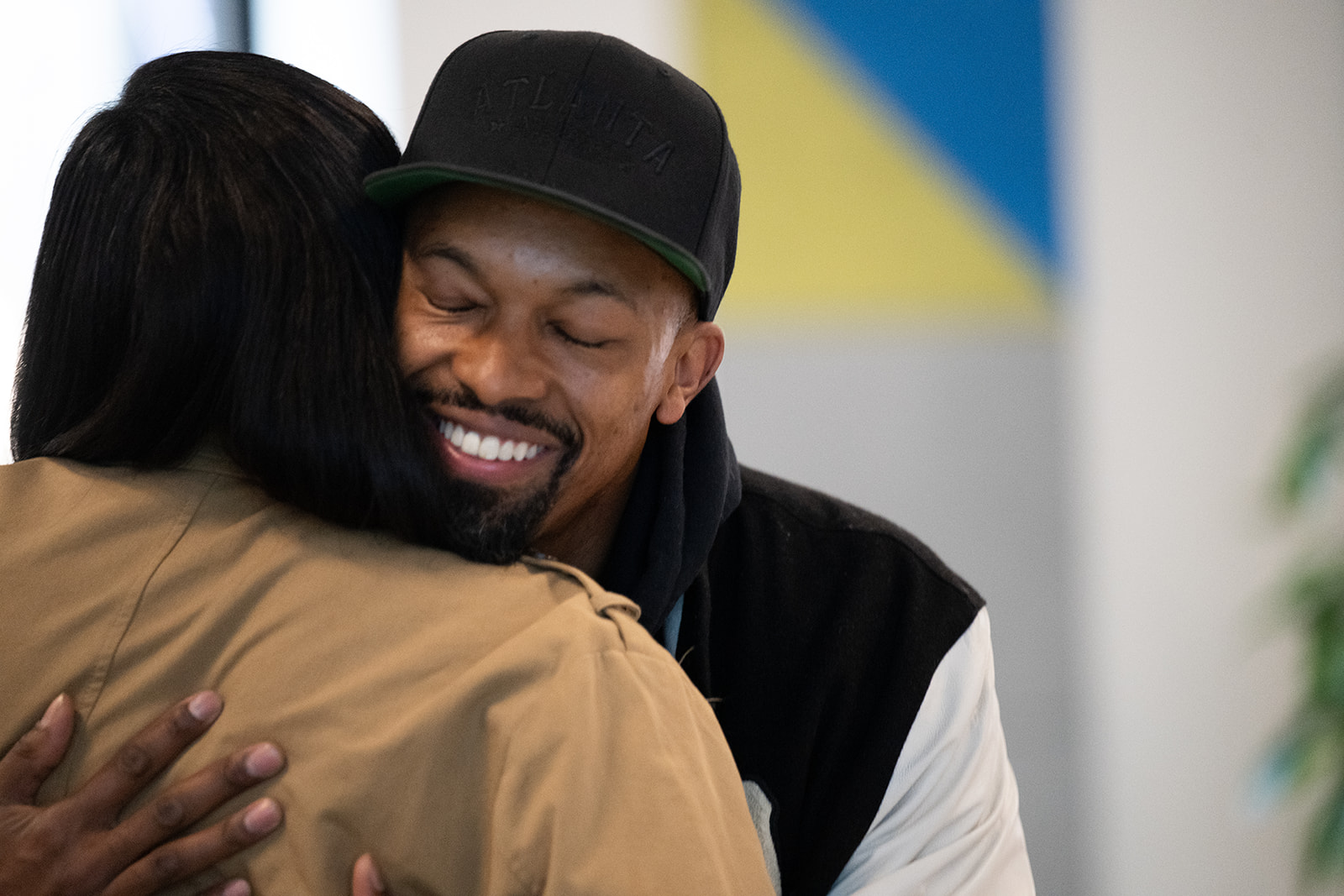
Because of the baseline trust and unique structure, the norm of networking fell away very quickly after check-in. Within the first 20 minutes, Pixel Recess participants shifted from asking people what they do or who they work for to real curiosity. Instead of ‘where do you fit into my pipeline,’ the room moved toward ‘what are you working on and what do you need?’ When signal is present, people don’t have to guess where they can be helpful — they can see it.
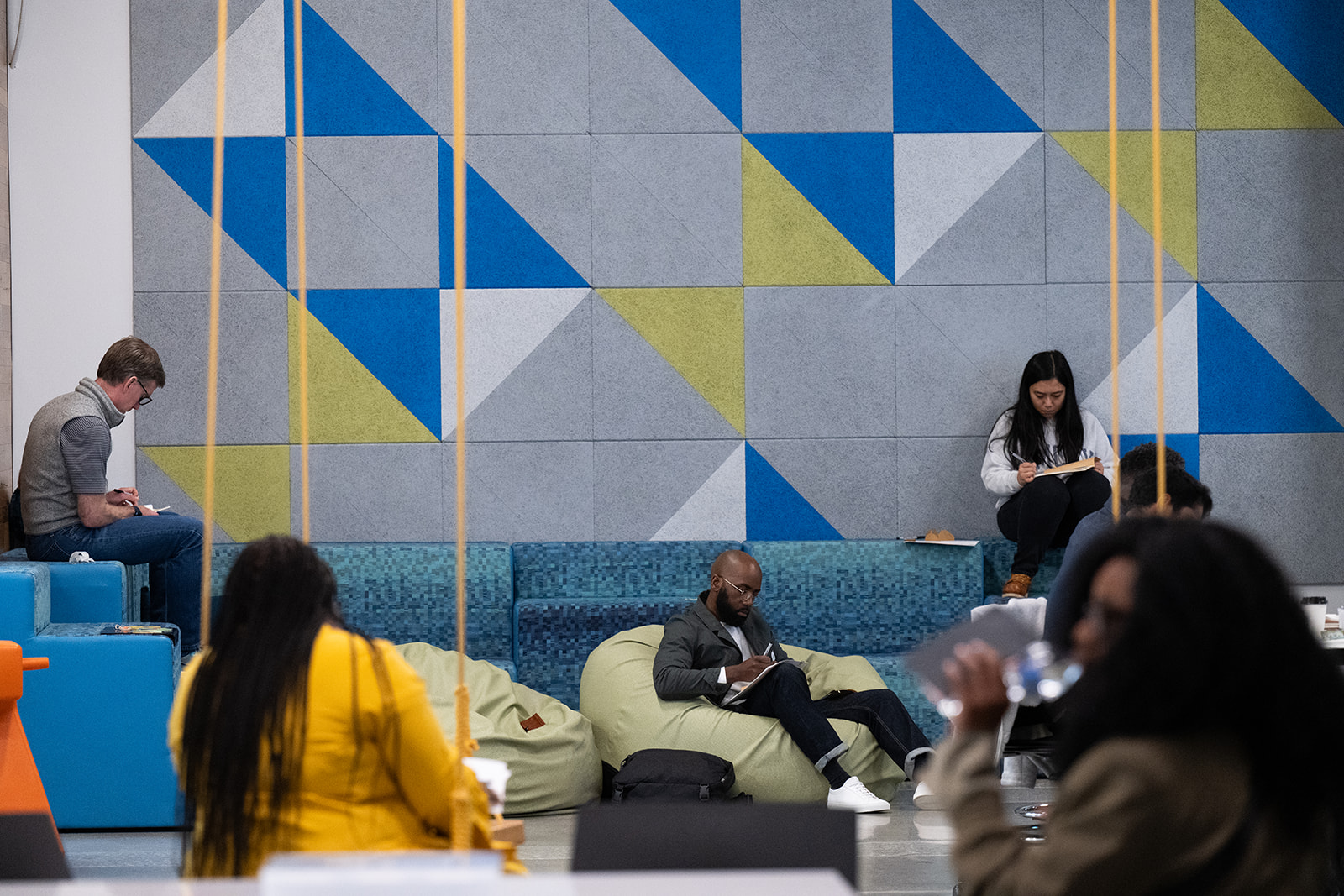
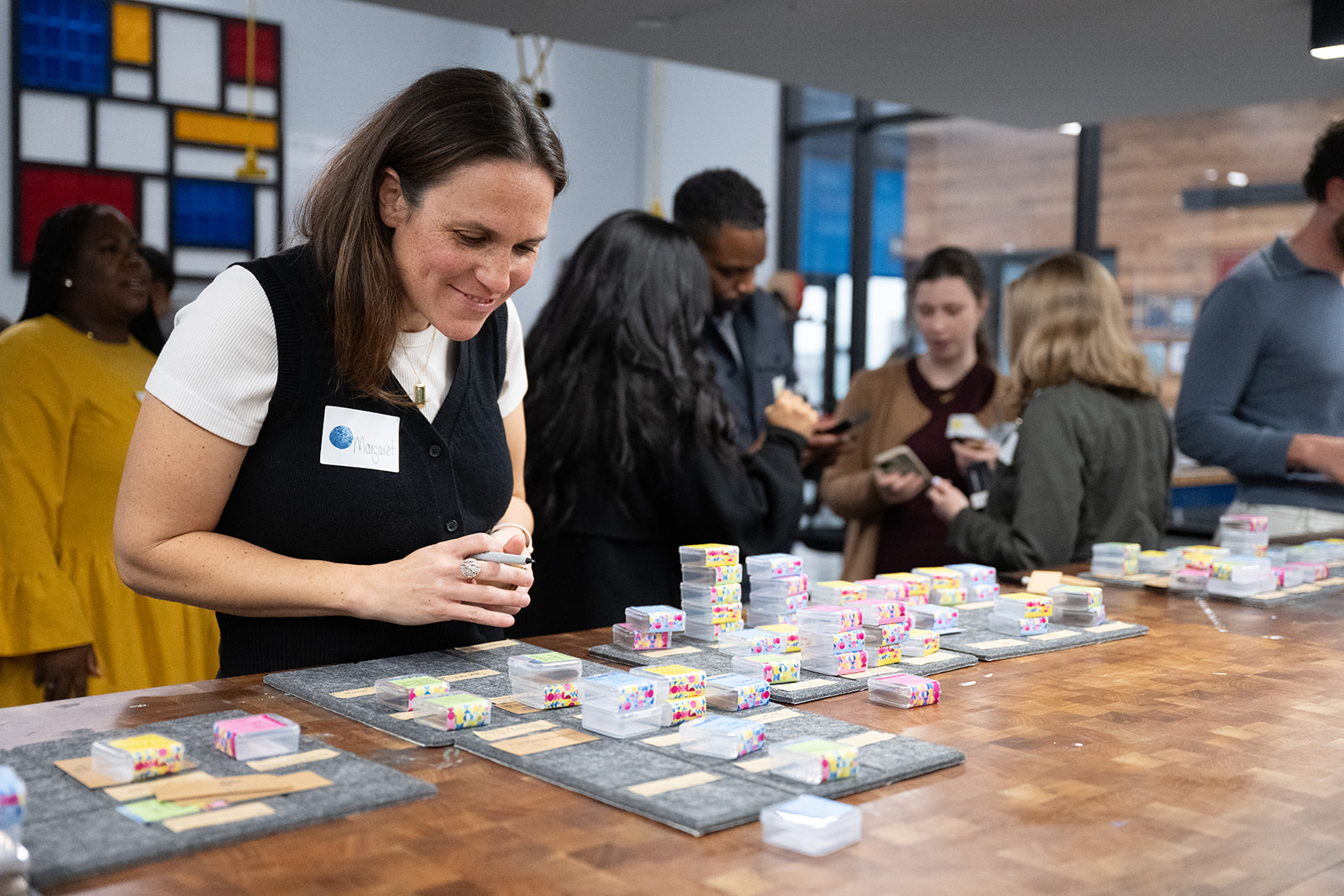
After check-in, everyone moved into a guided individual reflection using physical materials. Sitting in a room where dozens of professionals are individually reflecting and writing — at tables, on bleachers, on swings — is a wholly different experience than rows of chairs facing a stage and listening to speakers.
A founder told me ten minutes after arriving that he had just met a new work best friend, someone he would not have met at any other startup event. These weren’t accidental conversations. They were the result of intentional group design. Phones went down and into pockets — and they stayed there for the whole afternoon. We’d engineered serendipity through Community OS.
People almost immediately shifted into something more human, more contextual. This held true as we moved into curated small group activity, where participants made physical ‘pixel’ representations of their resources — financial, infrastructure, relationship and reputational. In most startup events, asking anyone what they needed most would get the same reply: every founder, investor and ecosystem partner would love a big check they can use how they want. Grounding the activity in that shared wish and implausibility was key to unlock the resources we do have.
Once resources were named, participants wrote down their needs and placed them on a central board. A microhost trained by Hauswarm facilitated mapping resources to needs as a conversation — guiding each small group to observe and discuss assumptions, opportunities and perspectives. The activity created a snapshot of that particular group at that particular moment in time. It also accelerated connection among individuals representing different roles, goals, motivations and experiences. The pathways were open, and signal was flowing!
What This Reveals About Ecosystems
Ecosystems don’t lack resources — they lack visibility.
The collective group of boards represented 117 unique needs, and the average resource to need ratio was X:X. Signal is often the missing layer to uncover hidden abundance.
Silos are behavioral, not just structural.
Role-based assumptions on needs, resources and goals limit outcomes for everyone. These are reinforced by default networking patterns and lack of intentional intersectional cross-pollination. Fragmentation fortifies silos; community connects them.
We’re not on opposing sides.
Founders, investors, operators and partners share outcomes. Misconceptions about incentives and value create false antagonists instead of active collaborators, and the ecosystem behaves like separate systems when it’s actually one.
The Community OS Difference
Most events don’t fail because of format — they fail because they lack an underlying system. They have nodes without curation, low or performative trust, little to no signal, accidental pathways and no continuity. Community OS solves this by design. With Pixel Recess Atlanta, all five components were intentionally designed, so the system worked as a whole instead of isolated parts.
Community OS requires stewardship — not just coordination.
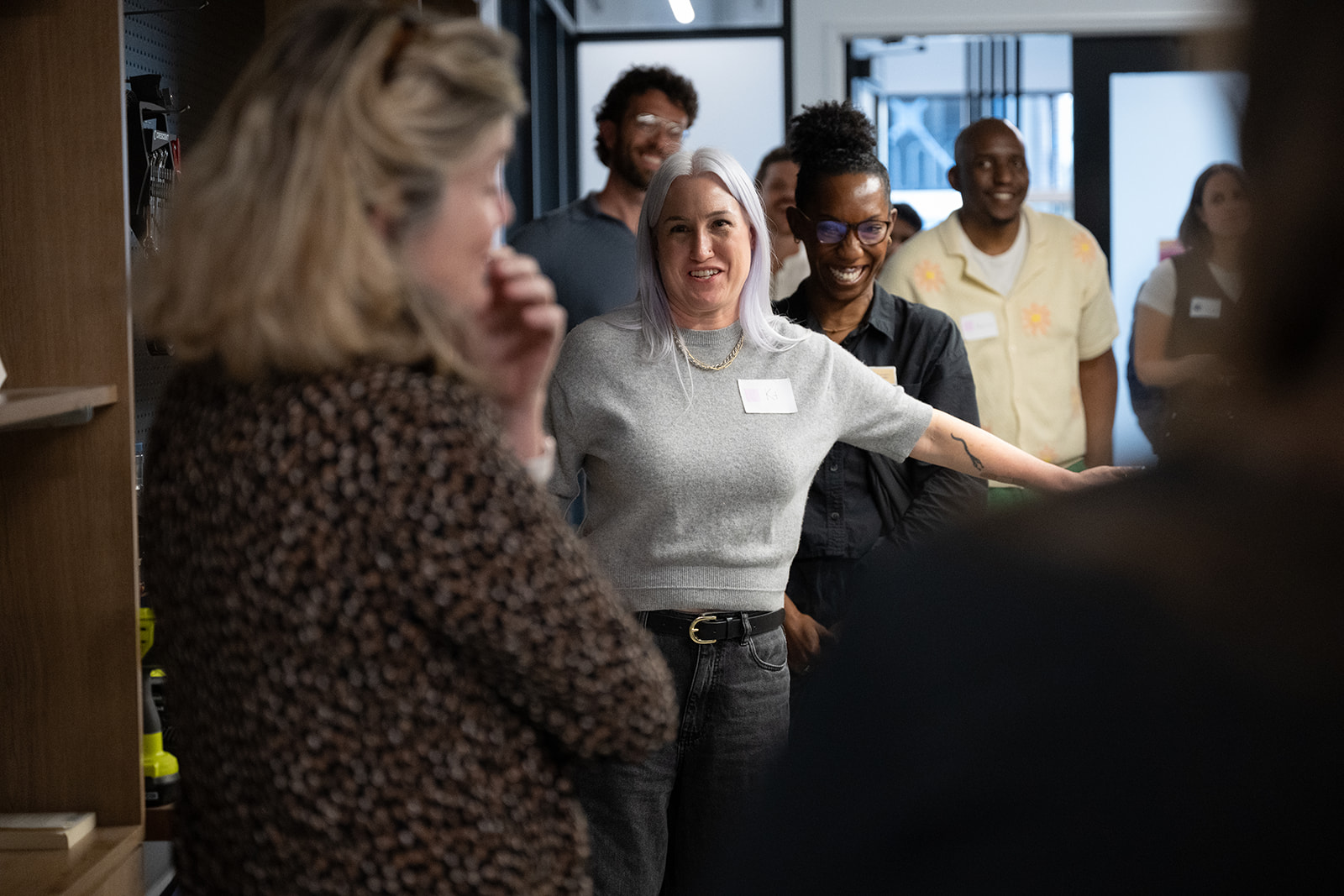
The system doesn’t run itself. Pixel Recess was an example of Community OS in action, but experiences like this require a steward — someone responsible for creating the conditions where collaboration can happen. The community steward curates nodes, designs for trust, creates and amplifies signal, enables pathways, and sustains continuity. This is not logistics. It’s systems design.
Cross-pollination doesn’t happen by accident. It requires intention — both in who is in the room and how they engage once they’re there. Random networking rarely produces meaningful collaboration. Structure shapes interaction, and containers create behavior. When the right mix of people are brought together with clear expectations and thoughtful design, the quality of connection changes. Curation isn’t about exclusivity — it’s about creating the space where something useful can actually happen.
Trust is what allows the system to activate. People will step outside of their comfort zones when the environment makes it safe to do so, but that trust has to be built and earned. When it’s present, signal becomes real — people share what they actually need, what they actually have and where they can contribute. Participants don’t just attend, they shape the experience itself. That’s what makes a community a living system.
Community is infrastructure, not programming. Events are outputs, but the system is the asset. Events can create moments, but without an underlying system, those moments dissipate. Community OS is what allows those moments to turn into momentum — where relationships continue, resources move and outcomes build over time.
Ecosystems don’t struggle because they lack people or resources. They fail because there’s no system that allows those people and resources to move. What we call “community” is often treated as a layer on top — events, content, a Slack group — but when it’s designed intentionally, it becomes the infrastructure that makes everything else work.
Pixel Recess Atlanta wasn’t an event experiment as much as a systems one: what happens when you design for trust, signal, and connection instead of activity. The answer is that things start to move. And when things move — when people can see each other, trust each other, and respond to what’s actually needed — a fragmented network starts to behave like an ecosystem. That’s the power and potential of Community as Operating System.
